ADA-Compliant Portable Restrooms and the Importance of Easily Accessible Routes
When individuals speak about an ada certified portable bathroom, they often concentrate on the system itself. Is it large enough? Does it have the right symbol on the door? Was the appropriate design delivered? Those concerns issue, however they miss a trouble that turns up constantly in the area. A washroom can be practically obtainable in isolation and still be unusable if no person can reach it securely and independently.
That gap in between the unit and the course is where a great deal of access failings happen.
I have seen planners spend real money on ada certified portable toilets, only to place them past soft grass, loosened crushed rock, visual sides, or a steep temporary ramp that looked fine from ten feet away yet did not benefit the individual that required it. The result is discouraging for guests, embarrassing for organizers, and high-risk from a conformity point ofview. Access is not just about having an ada portable washroom on website. It is about creating a usable course to it, a practical entry, and sufficient space around it so an individual can approach, get in, and utilize it with dignity.
That is the practical heart of the ADA criteria for portable units. The toilet issues, and the course matters equally as much.
Accessibility begins before the door
Under the regulating federal accessibility standard in the USA, the 2010 ADA Specifications for Accessible Design regulate this location, as interpreted by the Accessibility Board and the Department of Justice. For portable toilet setups, that implies the discussion is broader than the shell of the system. The criteria resolve the available route, the entry, and any kind of ramps or landings that may be https://devinfulv025.birchreport.com/posts/ada-mobile-bathroom-needs-for-general-portable-bathroom-rentals required. They additionally deal with the technical demands inside the bathroom space itself, including fixture clearances, transforming room, navigating clearances at doors, and relevant grab bar and water wardrobe clearance rules.
That can sound abstract up until you envision a genuine event site.
Imagine a celebration with twenty mobile devices lined up along an area. One system is marked as the ada handicap accessible portable washroom. Theoretically, a person might feel the job is done. Yet if that system sits at the far end of a muddy incline, behind a line of typical devices that narrows the strategy, or on unequal ground that shifts after light rainfall, after that the individual who needs the easily accessible system is the one doing additional work, taking added risk, and relying on extra assistance. That is precisely the type of outcome ease of access standards are indicated to prevent.
An accessible path is not a side issue. It is the condition that makes the bathroom truly available.
What the ADA in fact needs for mobile bathroom clusters
One of the clearest regulations in this area puts on collections of mobile single-user bathroom systems. At the very least 5 percent of the devices in each cluster should be accessible. The Gain access to Board has made clear that this applies also at temporary events.
That point issues due to the fact that momentary configurations are typically dealt with also casually. There is a lingering presumption that if something is only in position for a weekend, the availability regulations in some way soften. They do not. Short-term does not indicate exempt.
For occasion planners, website managers, and companies handling an ada mobile toilet service, this 5 percent regulation should be part of the earliest preparation conversation, not a last-minute change. Waiting till distribution day creates foreseeable issues. The appropriate available system might be readily available, but the space planned for it may not be. The matter might practically work, but the placement might fall short. The path might look functional until foot website traffic, climate, fence, or supplier equipment adjustments how people relocate with the site.
A cluster additionally needs to be understood as a cluster. If mobile devices are organized in different areas, the accessible count has to be thought about in each collection, not just as an overall number spread throughout the residential or commercial property. That is the kind of detail that gets overlooked when teams are hurrying through logistics.
The symbol on the door is only the beginning
Accessible mobile commode devices should be identified with the International Symbol of Availability. That is a crucial demand, and it serves a sensible function. Clear identification assists people find the device intended for accessible usage without confusion or the requirement to request for assistance.
Still, the sign can create an incorrect sense of security for organizers. The visible marker is simple to inspect. It seems like evidence. Yet the harder part is everything around the device. If the path is hard to reach, the marked unit becomes an assurance the website does not in fact keep.
I have seen this tension at neighborhood events where the available unit was provided properly and identified correctly, yet placed behind group control barriers with a narrow swing path. No one included was attempting to leave out any person. The concern was more ordinary than that. One team handled washroom placement. Another handled barricades. Another managed energies. Each team made a little decision that made good sense in isolation. Assembled, those choices blocked access.
That is why easily accessible routing needs a single person, or one coordinated team, taking a look at the whole experience from arrival to exit.
Why accessible courses fall short so often
Portable restroom availability is stealthily complicated because it resides in settings that are continuously transforming. Building and construction hosting locations change. Event grounds get torn up by traffic. Short-lived fence steps. Climate changes surface areas. A route that was workable at 8 a.m. May be a trouble by afternoon.
Common failures have a tendency to find from a couple of patterns:
- the obtainable system is positioned on a surface area that becomes unsteady or uneven
- the path to the device is blocked by barriers, equipment, or group flow
- a ramp or landing is added, however its style or positioning does not meet ADA technical requirements
- the technique area is too limited for comfortable door maneuvering
- the device matter is dealt with properly, however the easily accessible system is isolated in a much less useful location
What stands out is how frequently these failures come from comfort. The available device is bigger, so crews position it where there is added space, which may be further away or more difficult to get to. Or the unit is evaluated the side of a website to simplify maintenance, also if that side has the worst ground problems. A choice that assists procedures can silently hurt access.
The ADA standards do not ask whether the placement was practical for the delivery truck. They ask whether the center is accessible to the user.
The course becomes part of the restroom experience
People that do not regularly think of accessibility in some cases treat the route as different from the bathroom. In method, they are inseparable. If a visitor has to detour around stakes, cross rough short-lived ground, or ask for assistance simply to reach the door, that is not equal access.
An available course needs to function the way the restroom itself is anticipated to work, accurately, individually, and without unnecessary difficulty. The Accessibility Board support is specifically essential below since it makes clear that mobile accessible devices should have an obtainable route and entrance, and any kind of required ramps or landings must abide by the ADA technical requirements.
That last phrase issues. If a site requires a ramp or landing, it is not nearly enough to improvise something that looks valuable. Temporary solutions commonly create new barriers. A plywood sheet over a lip might appear useful, but appearance is not conformity. A makeshift incline may look navigable to an able-bodied supervisor and still stop working for a wheelchair customer. When unsure, individuals should stand up to need to develop a workaround on website and rather strategy appropriately prior to the devices arrive.
Inside the device still matters
It is easy to highlight routes so heavily that the device itself discolors into the history. That would certainly be a mistake. An ada certified portable bathroom still has to satisfy bathroom space technical demands. The standards resolve component clearances, transforming space, door steering clearances, and relevant grab bar and water storage room clearance rules.
These are not aesthetic details. They affect whether an individual can get in, close the door, rearrange, move, and leave securely. A roomy-looking device can still fall short if inner clearances are not right. A properly placed system can still be unusable if steering area is compromised.
This is one factor experienced coordinators prevent lowering access to a solitary item label. Claiming you ordered an ada accessible portable restroom is insufficient if no person confirmed the technological fit of the unit and the site problems around it. Product descriptions in the rental market differ. Some are marketing language, some are shorthand, and some are accurate. The phrase ada-compliant portable bathroom just indicates something helpful when the real device and real placement satisfy the controling standards.
Temporary events are worthy of the exact same seriousness
Portable washrooms appear in position that are hectic, loud, crowded, and short-term. Fairs, public gatherings, races, events, outdoor efficiencies, emergency action settings, and seasonal activities all tax timelines. Access can get pushed right into a box identified later.
That habit is expensive. As soon as a site is totally constructed out, moving an accessible unit into a convenient area can become tough. Utility lines may already be laid. Supplier cubicles might already be bet. Fencing might already be set. Foot website traffic patterns might currently be secured. Fixing the path at that phase typically means downfall other work.
A better approach is to deal with the accessible route as one of the anchor aspects of the website strategy. Not decorative, not optional, not something to press in after the premium areas are designated. If a course is shielded early, other short-lived functions can be developed around it.
This is especially vital because enforcement activity around ADA compliance does not exist in a vacuum. Availability responsibilities are being reviewed throughout fields, and the broader conformity climate has just end up being a lot more active. Anybody in charge of public holiday accommodations or government-related events must review that fad correctly. It is a signal to take accessibility planning seriously, not just at the factor of complaint.
A mindful note regarding building and construction sites
There is one area where individuals frequently overgeneralize. The ADA requirements have actually distinguished mobile toilet systems at building websites used exclusively by building workers. Those systems were treated differently under the pointed out 1991 criterion in connection with the portable-toilet availability scoping need. That slim difference has led some individuals to presume that portable bathroom availability is normally adaptable on job sites.
That is not a secure assumption.
For basic mobile toilet services, the accessible-unit requirement continues to be. And once portable units are offering the general public or mixed individuals in various other contexts, the regular access analysis applies. This is where careful reading matters. One minimal exception in one context does not erase the wider rule.
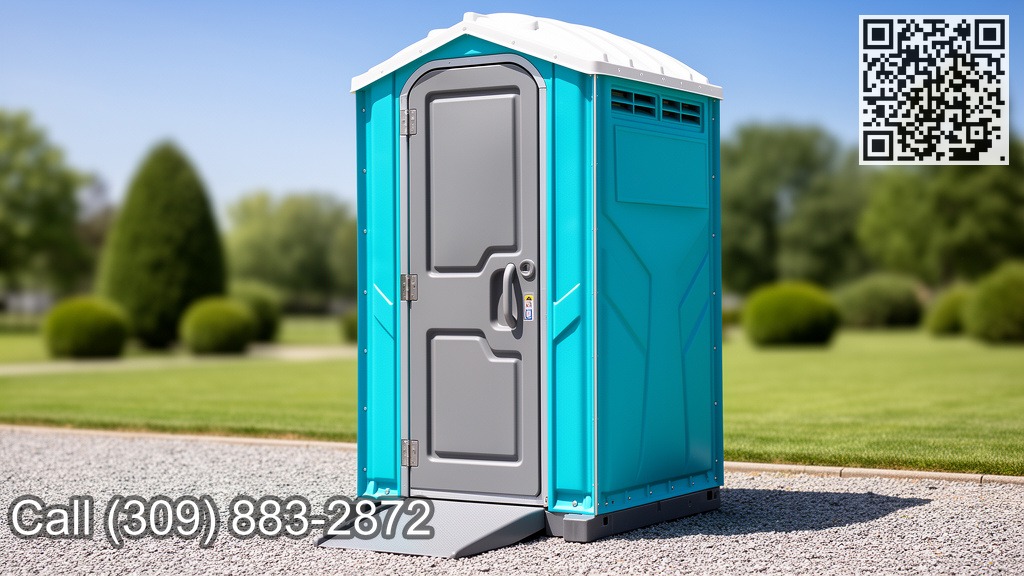
The real-world lesson is straightforward. If you are organizing an ada mobile toilet service for public usage, do not rely on rumor from a person that when listened to building and construction websites were different. Confirm what setting you are taking care of and strategy accordingly.
What wise preparation looks like on the ground
Good availability planning for mobile toilets is normally peaceful. It does not attract focus due to the fact that it functions. Individuals can locate the device, reach it, enter it, and use it without a reservation. That outcome is seldom accidental.
The toughest groups tend to ask sensible questions early. Where will individuals show up from? What surface area will they go across? Will that surface area change after climate or rush hour? Is the obtainable device being put in the exact same general location individuals currently make use of, or eradicated to a leftover edge? If a ramp or touchdown is needed, is it developed and installed to fulfill ADA technological requirements? Has a person strolled the route as it will in fact work during the event, not equally as it appears on the site map?
These are not extravagant questions, however they prevent the awkward scenes that leave people feeling omitted. Ease of access usually stops working in the seam in between divisions, so sychronisation issues as much as good intentions.
Here is a brief field-minded checklist that typically helps before final placement:
- confirm the cluster matter includes the required easily accessible units
- verify the obtainable device is clearly understood the proper symbol
- inspect the full route to the unit, not just the system pad
- review any type of ramp or touchdown for ADA technological compliance
- check that bordering design modifications will not obstruct the method or entrance
That kind of review does not require a significant procedure. It requires discipline.
Language issues much less than performance
In the rental industry, individuals utilize many overlapping expressions: ada compliant available mobile restrooms, ada-compliant portable bathrooms, ada certified portable commodes, ada mobile restroom, ada portable toilet, also ada handicap available portable bathroom. Consumers looking online may make use of any of them. The important thing is not the precise phrase. The essential thing is whether the toilet and its path perform as required.
I claim this due to the fact that purchasers can obtain shed in tags. They contrast names, design titles, and marketing copy, and fail to remember to ask the more consequential inquiry: where is this unit going, and exactly how will certainly a person reach and use it?
An obtainable washroom on an unattainable route is a procurement success and a user failure.
That might seem blunt, but it shows how these circumstances play out. The distribution ticket might be accurate. The billing might say ada certified portable toilet. The occasion group might honestly believe it covered its responsibilities. Yet the person who shows up utilizing a mobility device, walker, or various other wheelchair help experiences a really various fact. They experience the route initially. They experience the incline first. They experience the limit, the crowding, the blocked technique, the unsteady ground. That experience is what availability regulation and excellent website planning are intended to address.
Dignity is the actual measure
There is a human side to this that obtains buried under conformity language. Portable restrooms are a basic service. Individuals require them without excitement, without negotiation, and without having to reveal personal restrictions to strangers simply to make it through the day.
When the path is unattainable, an individual might need to ask a volunteer to relocate a barrier, ask a friend to maintain a chair, ask staff where the "special" bathroom is, or surrender completely. That is not a tiny inconvenience. It alters just how welcome they really feel at the site.
A compassionate method to ease of access acknowledges that lots of people do not desire special therapy. They desire foreseeable access. They want the exact same level of personal privacy and freedom other visitors consider given. An ada-compliant mobile toilet that can actually be reached aids make that possible.
And when obtainable routes are prepared well, every person benefits. Staff have fewer grievances to handle. Organizers prevent emergency situation rework. Families, older grownups, and any individual relocating with the site with care have a safer, clearer path. Accessibility done right often tends to boost the general usability of the space.
The ideal concern to ask before configuration day
If there is one inquiry worth asking before any kind of portable toilet installment, it is this: can a person individually get from the site entry or task area to the accessible device, enter it, use it, and leave it without encountering a preventable barrier?
That concern naturally draws attention beyond the device itself. It compels a team to think about the route, the entry, the bordering design, and the altering conditions of a short-term site. It likewise assists cut through unclear cases. Rather than debating whether a specific product seems compliant, the group examines whether the real-world setup will be.
That is where the significance of obtainable courses comes into emphasis. They are not a secondary feature affixed to an ada obtainable portable bathroom. They are one of the core problems that make availability real.
Portable restrooms are temporary, but the commitment to give purposeful accessibility is not. When individuals bear in mind that, they make far better placement choices, stay clear of preventable errors, and produce sites that really feel extra respectful from the initial step to the last.
 Ask ChatGPT
 Ask Grok
 Ask Perplexity
 Ask Claude
 Ask Google AI
 Ask You